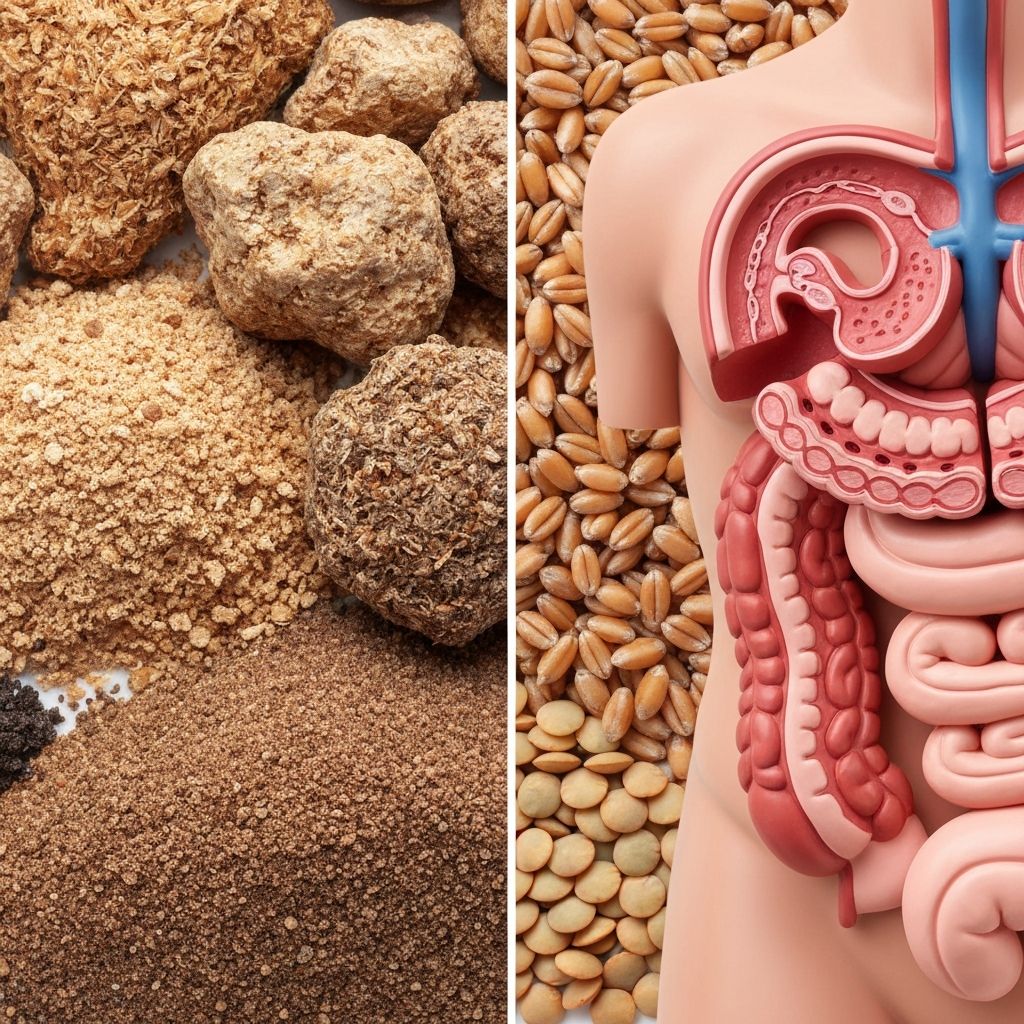
Understanding Dietary Fiber
Dietary fiber comprises the indigestible portions of plant foods. Unlike other carbohydrates, fibers are not broken down into absorbable sugars during human digestion. This property fundamentally shapes their physiological effects and interactions with gut ecosystems.
Soluble vs. Insoluble Fiber
Soluble fibers (found in oats, legumes, apples, and citrus) dissolve in water, forming viscous gels in the digestive tract. They slow gastric emptying, moderate glucose absorption, and serve as fermentable substrates for gut bacteria. Insoluble fibers (from wheat bran, vegetables, and whole grains) resist dissolution and promote intestinal transit time.
Both types play distinct roles in digestive physiology. Insoluble fibers increase stool bulk and support regular intestinal transit. Soluble fibers influence nutrient absorption rates and provide fermentable substrate for beneficial microbiota.
Fiber and Gut Microbiota
Dietary fiber serves as the primary energy source for beneficial gut bacteria. As microbiota ferment fiber, they produce short-chain fatty acids (butyrate, propionate, and acetate), which have multiple physiological effects: nourishing intestinal epithelial cells, influencing immune function, and affecting systemic metabolism.
The composition of the gut microbiota influences how effectively consumed fiber is fermented. Individuals with diverse microbial communities tend to extract more metabolic benefit from dietary fiber, suggesting that fiber effects are not uniform across populations.
Fiber and Carbohydrate Metabolism
Soluble fiber viscosity slows nutrient absorption, moderating postprandial glucose spikes. This property influences insulin secretion patterns and may contribute to improved glycemic control in some contexts. However, the magnitude of effect depends on soluble fiber quantity, food composition, and individual factors.
Fiber and Satiety Physiology
High-fiber foods typically have lower energy density and promote mechanical distension of the digestive tract, triggering satiety signals. This relationship helps explain associations between whole-grain and vegetable consumption and weight management in population studies.
Conclusion
Dietary fiber represents a critical nutrient category influencing digestive physiology, microbiota ecology, and systemic metabolism. Evidence supports adequate fiber intake as a foundational component of nutritional health. Fiber sources include whole grains, legumes, vegetables, and fruits.